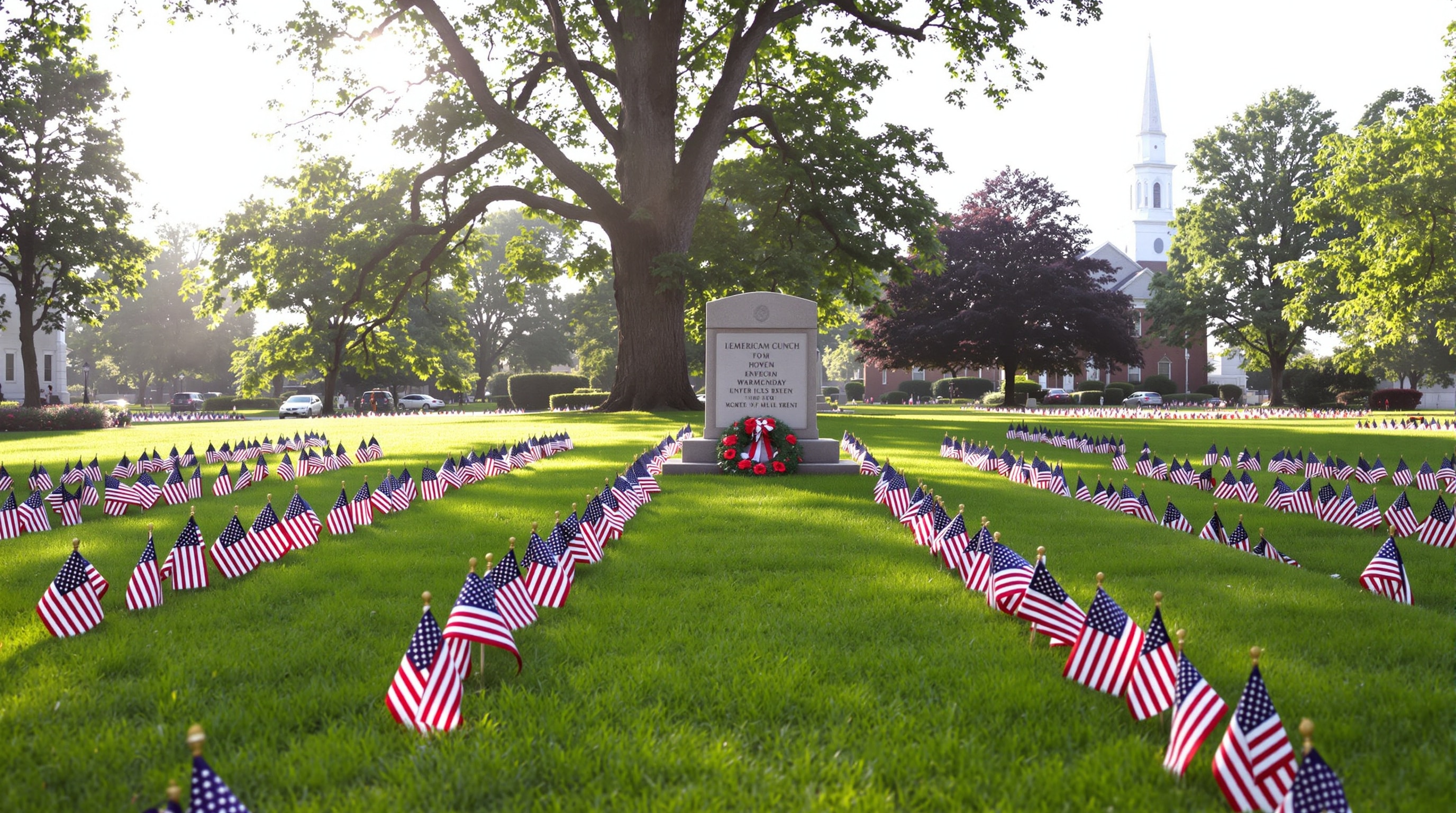
The way a small town like Belleville remembers its fallen is part of a much larger American tradition — a set of civic customs, older than the nation itself, for keeping local sacrifice in living memory.
The Honor Roll
The town honor roll — a list of local men and women who served, with the fallen specially marked — became widespread during and after World War I and flourished in World War II. Painted boards in town squares, bronze plaques on public buildings, and printed booklets all served the same purpose: to record every name so that no one would be forgotten. The impulse behind the honor roll is deeply democratic, insisting that the humblest private is remembered as carefully as any general.
Memorial Day
The nation's central day of remembrance grew out of the Civil War. In its aftermath, communities North and South began decorating soldiers' graves with flowers each spring, a custom that became known as Decoration Day and, formally, from 1868. Over time it evolved into Memorial Day, the last Monday in May, dedicated to those who died in the nation's service. In towns everywhere, the day still centers on the local memorial, with flags, wreaths, and the reading of names.
Veterans Day
Where Memorial Day honors the fallen, Veterans Day honors all who served. It began as Armistice Day, marking the end of the First World War on November 11, 1918, and was broadened in 1954 to recognize veterans of every conflict. The U.S. Department of Veterans Affairs maintains the history of the observance and its traditions.
Monuments and Living Memorials
Communities give their remembrance permanent form in many ways. Some raise monuments — obelisks, statues, engraved walls — while others create "living memorials" such as parks, groves of trees, or dedicated buildings and roads. Belleville's memorial street signs are a modern example of this living-memorial tradition, weaving remembrance into the everyday fabric of the town.
The Role of Veterans' Organizations
Much of this remembrance is sustained not by governments but by veterans themselves. Organizations such as The American Legion, the Veterans of Foreign Wars, and their auxiliaries organize ceremonies, maintain memorials, place flags on graves, and carry the memory of local service from one generation to the next.
The Reading of the Names
Perhaps the most moving ritual of American remembrance is the simplest: the reading aloud of names. At Memorial Day ceremonies in towns across the country, a bell tolls and the names of the local fallen are read one by one, each a small act of resurrection. The practice reflects the same conviction that produced the honor roll — that a community's debt is owed not to an abstraction but to individuals, and that speaking a name keeps it from slipping into silence. It is a tradition that requires no budget and no monument, only the willingness to remember.
Passing It On
The hardest test of remembrance is time. The living memory of a war fades as its veterans pass, and each generation must consciously choose to carry the memory forward. Schools, scout troops, veterans' auxiliaries, and local historians all play a part, teaching young people why the flags appear each May and what the names on the monument mean. When that transmission succeeds, a town's remembrance outlives everyone who witnessed the events firsthand — which is, after all, the entire point.
Why It Endures
These customs endure because they answer a simple human need: to say that a life given in service mattered, and to a specific place as much as to the nation. That is the spirit behind Belleville's two centuries of remembrance — and behind every town green, plaque, and memorial street sign across America.