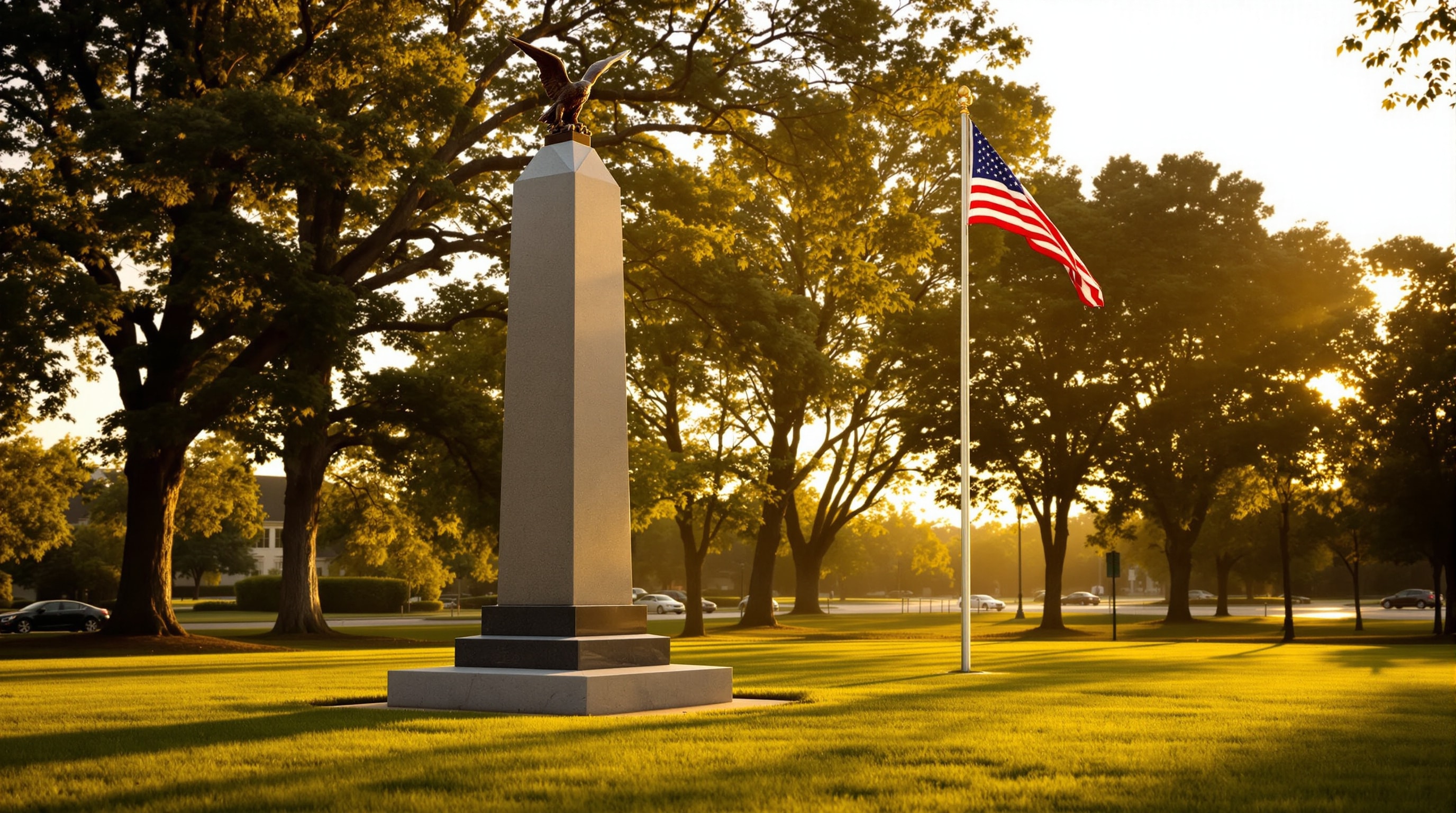
The stone and bronze memorials at the center of American towns are more than decoration. They are deliberate acts of collective memory, each with its own form, symbolism, and story. This guide explains how to read them — and how communities create and care for them.
Forms of Remembrance
War memorials take many shapes, and the form itself carries meaning:
- Honor rolls and tablets list names, insisting that each individual be remembered.
- Obelisks and columns, drawn from classical tradition, express permanence and civic dignity.
- Figurative statues — the Civil War infantryman, the World War I "doughboy" — give the fallen a human face.
- Memorial walls, like the one honoring Vietnam veterans in Washington, use the sheer accumulation of names to convey the scale of loss.
- Living memorials — parks, groves, bridges, roads, and dedicated streets — fold remembrance into everyday life.
The Language of Symbols
Memorials speak in a shared visual vocabulary. The eagle stands for the nation; the laurel or oak wreath for victory and endurance; the eternal flame for undying memory; and the reversed rifle or empty boots for a fallen soldier. Even materials matter: enduring granite and bronze are chosen precisely because they are meant to outlast the generations that raise them.
How Communities Create Memorials
Most local memorials are grassroots efforts. A committee — often led by veterans, families, or a service organization — forms to raise funds, choose a design and a site, and commission the work. Public subscription drives, municipal grants, and donations from posts of The American Legion or the Veterans of Foreign Wars typically fund construction. Belleville's own veterans memorial reflects exactly this pattern of civic partnership, its panels re-engraved over the years as new names were added and old ones restored.
Caring for a Memorial
A monument is a promise that requires keeping. Bronze develops a patina and can corrode; stone weathers, stains, and cracks; inscriptions fade. Thoughtful maintenance — gentle cleaning, professional conservation, and careful record-keeping — preserves both the object and the names it carries. The National Park Service publishes respected public guidance on the preservation of historic structures and monuments that many communities rely on.
Dedicating a New Memorial
Communities that set out to create a memorial today tend to follow a well-worn path. A sponsoring group defines who and what is to be honored, then works with the municipality to secure a prominent, accessible public site. A designer or monument firm develops options, balancing dignity, durability, and cost, while the committee raises funds and gathers the names and facts to be inscribed — the research stage where accuracy matters most. A public dedication, timed to Memorial Day or Veterans Day, brings the effort to completion. Planning for long-term upkeep from the very start, rather than as an afterthought, is what separates a memorial that endures from one that slowly falls into neglect.
A Shared Responsibility
In the end, a memorial is only as alive as the community that tends it. Cleaning a plaque, planting a flag, reading a name aloud on Memorial Day — these small acts are what keep a town's heritage of service from fading into silence. To see how one New Jersey town weaves that responsibility through its streets, revisit our page on memorial street signs.