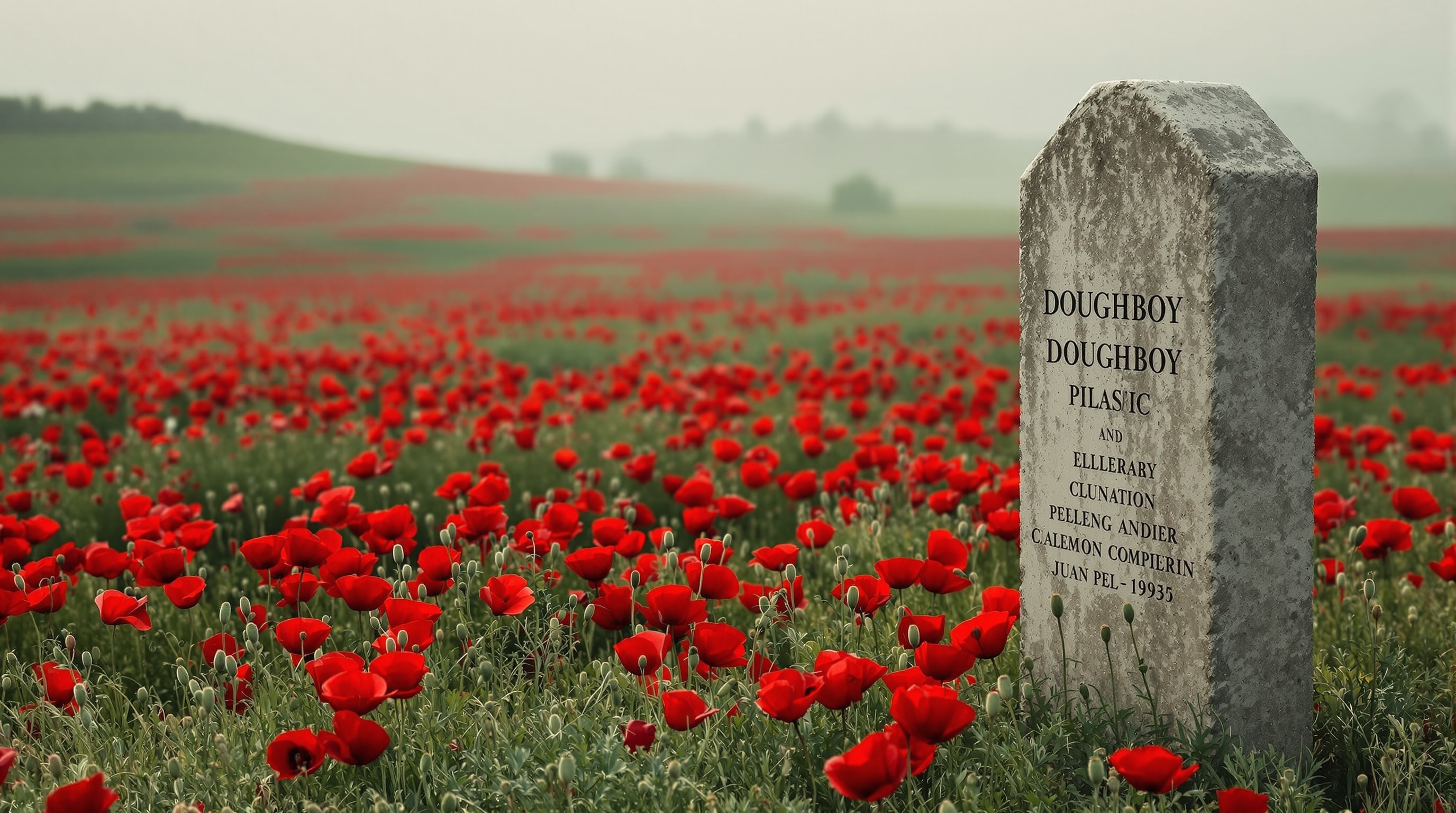
The First World War carried a generation of young men from Belleville's streets across the Atlantic to the trenches and forests of France. It was, for many American towns, the first modern experience of mass overseas sacrifice — and it gave rise to the rituals of remembrance we still keep today.
A Town Goes Over There
When the United States entered the war in 1917, Belleville, like communities across New Jersey, sent its sons into the newly expanded Army and Marine Corps. They trained through the winter, shipped to France, and joined the fighting in the war's climactic 1918 campaigns. More than twenty men from the town would not return — the first entries in what would become the modern town honor roll.
Belleau Wood and a Marine's Sacrifice
Among the defining American battles of the war was Belleau Wood, fought in June 1918, where U.S. Marines helped halt the German advance toward Paris at terrible cost. Belleville is the hometown of a Marine who earned the Medal of Honor in that battle: Gunnery Sergeant Fred W. Stockham. During an intense bombardment of high-explosive and gas shells, Stockham noticed that a wounded comrade's gas mask had been shot away. Without hesitation he removed his own mask and gave it to the wounded man, knowing the exposure would likely be fatal to himself. He died of the effects days later, on June 22, 1918. His valor was formally recognized with a posthumous Medal of Honor, and his name is preserved in the official records of the Marine Corps History Division.
The Home Front in the Great War
The war reached deep into Belleville's daily life even for those who never left. Local industry retooled for war orders, families bought Liberty Bonds and observed meatless and wheatless days, and Red Cross chapters rolled bandages and knitted for the troops. New Jersey's factories and shipyards were vital to the war effort, and the lower Passaic Valley hummed with wartime production. When the influenza pandemic struck in 1918, it added a second front of fear at home, filling hospitals and closing public gatherings even as the town waited for news from France.
The Birth of Remembrance
The Great War transformed how communities mourned. The Armistice that ended the fighting on November 11, 1918, became Armistice Day — later broadened into Veterans Day — and the red poppy of Flanders fields became an enduring emblem of sacrifice. Towns across America, Belleville included, raised honor rolls and memorials to their World War I dead, establishing a civic habit of remembrance that the next war would deepen.
The War's Toll and Its Meaning
World War I was a shock to American communities unprepared for the industrial scale of modern combat. Machine guns, artillery, and poison gas produced casualties on a scale never before seen, and the influenza pandemic that swept through crowded camps and troopships added still more names to the lists. When the survivors came home in 1919, they returned to towns that had changed, to families that had waited in dread, and to a nation newly aware of its place in the world. For Belleville, the more than twenty men lost were the seed of a lasting civic commitment to remember.
Reading a Doughboy's Record
World War I service records are among the most sought-after by family historians. Many state adjutant-general records and draft-registration cards survive and are searchable today; our research guide explains where to look. To follow the town's heritage into its costliest chapter, continue to our World War II page.