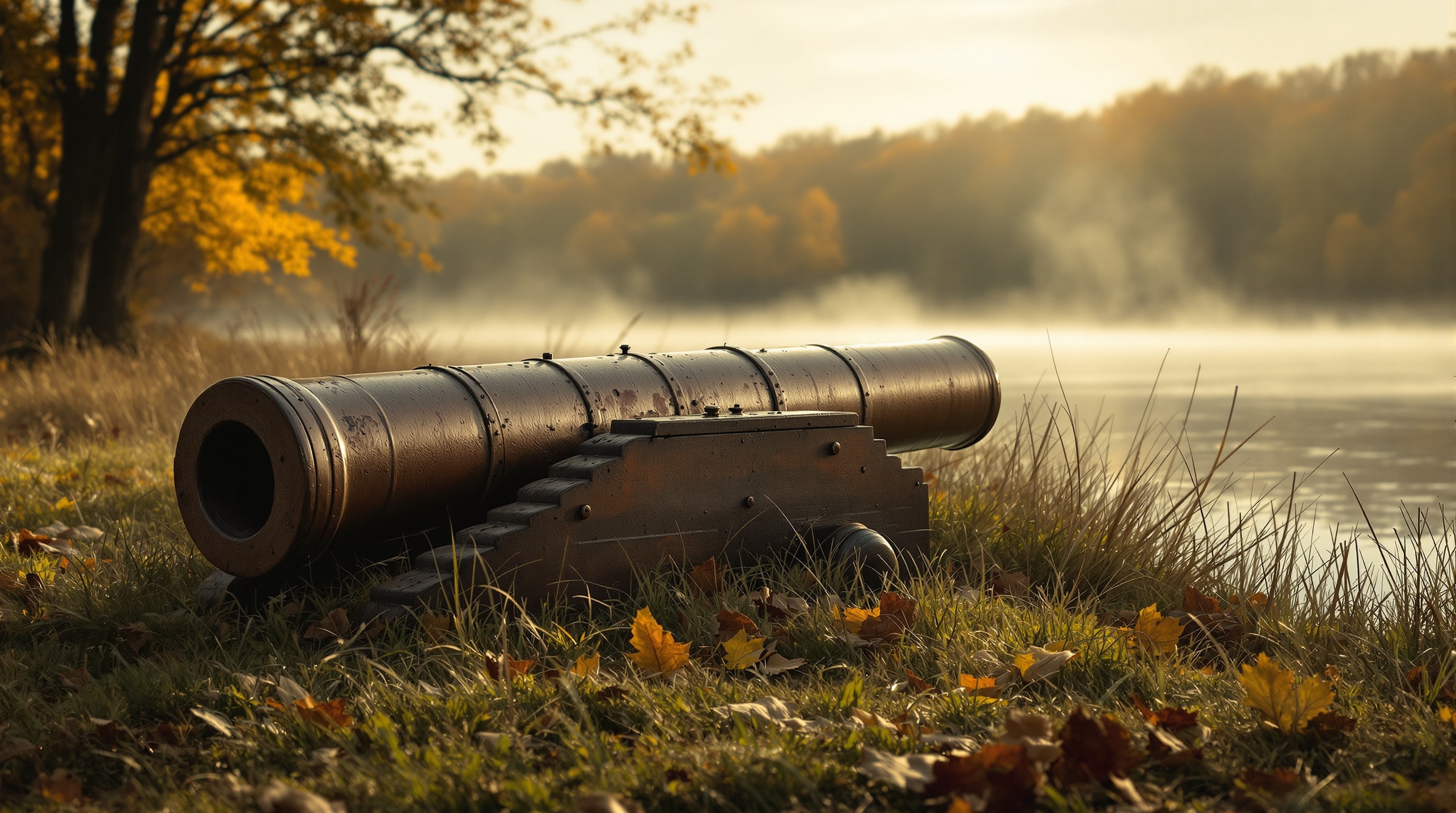
During the War for American Independence, the riverside district that would become Belleville lay in one of the most dangerous corners of New Jersey — a contested frontier between British-held ground near New York and the patriot interior.
A Divided Frontier
New Jersey earned its wartime reputation as the "Crossroads of the Revolution," and the lower Passaic Valley felt that role acutely. British and Loyalist forces occupied nearby positions for much of the war, while Continental and militia units operated across the surrounding countryside. Communities along the Passaic — the Second River settlement among them — sat within reach of both sides, exposed to raids, foraging parties, and the constant uncertainty of a borderland at war.
The Local Militia
Like other New Jersey towns, the Second River district contributed men to the Essex County militia. These were not professional soldiers but farmers, millers, and tradesmen who turned out when the alarm was raised and returned to their fields when the danger passed. Militia service was grueling and often thankless, yet it was the backbone of the patriot war effort in New Jersey, harassing enemy movements and defending home ground when the Continental Army was elsewhere.
Hardship on the Passaic
For civilians, the Revolution meant more than distant battles. Armies on both sides seized livestock, grain, and firewood; neighbors were divided between Patriot and Loyalist sympathies; and the river that had brought prosperity now carried the threat of raiding parties. The endurance of ordinary families through these years is itself a part of the town's military heritage — a first chapter in a very long story of sacrifice.
Crossroads of the Revolution
New Jersey saw more engagements during the Revolution than almost any other state, earning its enduring nickname as the "Crossroads of the Revolution." Its position between the British stronghold of New York and the patriot capital at Philadelphia made it a corridor of armies, and northern Essex County lay squarely within that corridor. Washington's Continentals wintered nearby, and the roads and river crossings of the Passaic Valley carried troops, spies, and supplies throughout the long conflict. For the Second River settlement, the war was never a distant rumor; it was a presence at the edge of the fields.
Remembering the Revolution
The Revolutionary generation left few monuments of its own in towns like Belleville, but later residents took care to remember the earliest of the community's fallen. Their memory is folded into the town's broader honor-roll tradition, which begins with the Revolution and runs through the twentieth century.
After the War
Independence did not end the hardship. Veterans of the Continental line and the militia returned to farms and mills that had suffered years of neglect and requisition, and the new nation was slow and uneven in providing pensions for its soldiers. Only decades later did federal pension acts finally reach many aging veterans and their widows — and those pension applications, rich with personal testimony, have become some of the most valuable records genealogists use to reconstruct a Revolutionary soldier's service today. In this way the paperwork of a struggling young republic still speaks for the men who won its freedom.
Explore the Sources
Readers who want to explore New Jersey's Revolutionary War history in depth can turn to excellent public institutions. Morristown National Historical Park, the nation's first national historical park, preserves key sites of the New Jersey campaigns, and the New Jersey State Archives holds militia and Revolutionary-era records. To continue the town's story, visit our Civil War page.