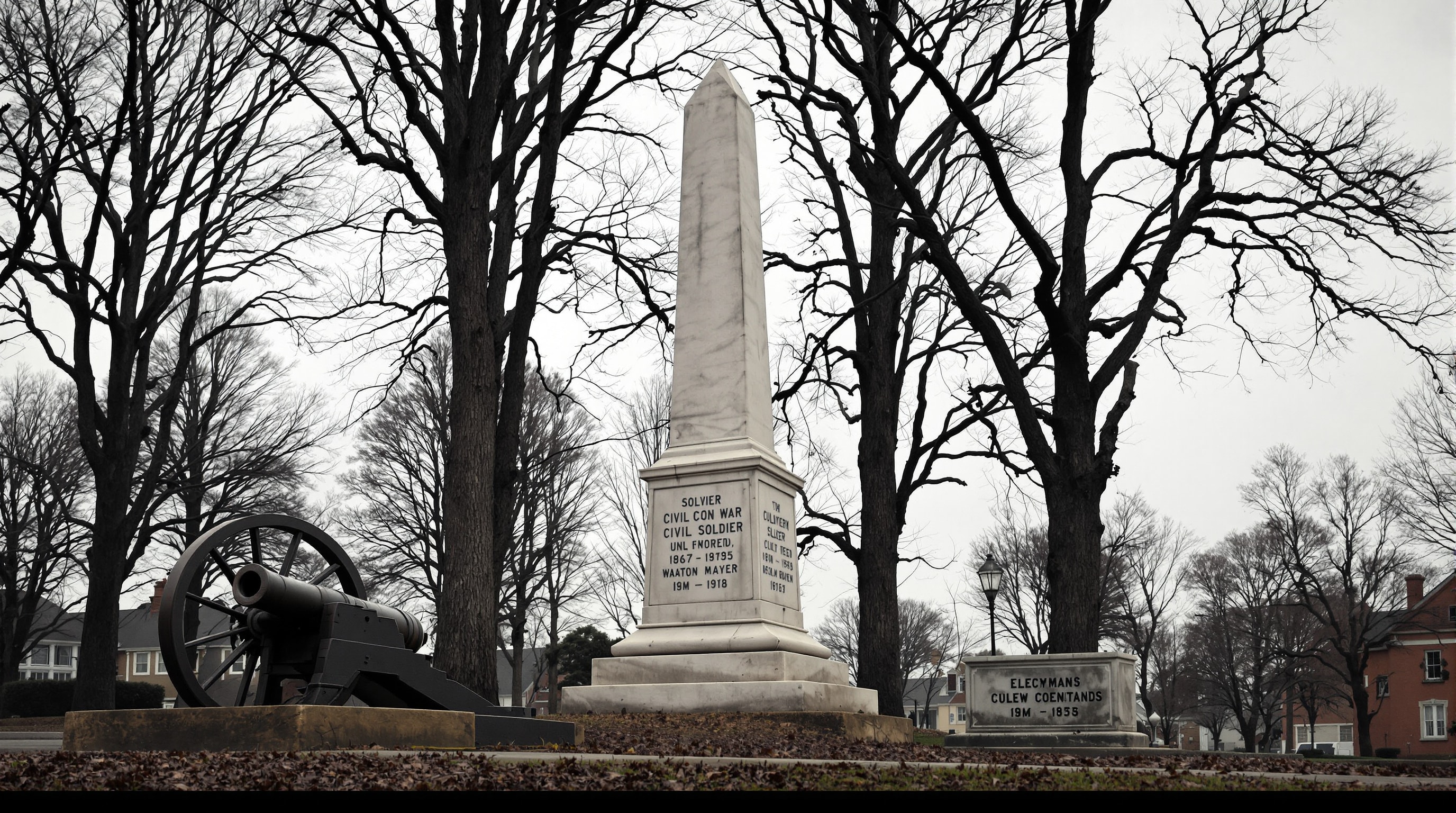
When the United States divided in 1861, the towns of New Jersey's Essex County — Belleville among them — answered the Union's call for volunteers. The war that followed touched every community in the state.
New Jersey Goes to War
New Jersey raised dozens of infantry regiments, along with cavalry and artillery units, over the four years of the Civil War. Men from the Passaic Valley enlisted in these state regiments and served in campaigns across Virginia, Maryland, and Pennsylvania. Some volunteered out of conviction, some for the bounty and the steady pay, and many for the simple reason that their neighbors were going. The American Battlefield Trust maintains excellent public resources on the campaigns these New Jersey soldiers fought.
Belleville and Nutley
Belleville and the adjoining community of Nutley — then still closely tied together — contributed their share of soldiers to the war. Local histories record volunteers who served in New Jersey and other states' militias, and a small number who were killed in action or died of disease, the great killer of Civil War armies. Each loss fell heavily on a community where nearly everyone knew everyone else.
Veterans and the Grand Army
After Appomattox, the Civil War's veterans became a powerful civic presence for the rest of the nineteenth century. Through the Grand Army of the Republic, the great fraternal organization of Union veterans, former soldiers marched in parades, cared for their disabled comrades, and — above all — championed the remembrance of the fallen. It was these aging veterans who did more than anyone to establish Decoration Day, the spring ritual of honoring soldiers' graves that would grow into the national observance of Memorial Day. The remembrance traditions that later generations of Belleville would extend to the World Wars trace directly back to them.
The Home Front
For those who stayed behind, the Civil War reshaped daily life. Women managed farms, mills, and households; aid societies gathered supplies and comforts for the troops; and the arrival of a casualty list from a distant battlefield could plunge a whole neighborhood into mourning. The industrial towns of the lower Passaic also supplied material for the Union war effort, a foreshadowing of the far larger mobilizations of the twentieth century.
Diaries and First-Hand Accounts
Some of the most valuable records of the era are the letters and diaries kept by ordinary soldiers. These first-hand accounts — preserved by families, historical societies, and archives — let us hear the war in the words of the men who lived it, describing long marches, camp life, and the terror and boredom of the front. They are a reminder that behind every entry on a casualty list stood a person with a voice of his own.
Disease, Distance, and Endurance
For the soldiers themselves, Civil War service meant long stretches of tedium punctuated by moments of terror. Disease claimed roughly twice as many soldiers as combat, sweeping through crowded camps where sanitation was primitive and medicine rudimentary. Men from the Passaic Valley endured months away from home with little communication, their families anxiously scanning newspapers for casualty lists and regimental news. That endurance — of the soldier in the field and the family at home — is as much a part of the war's local legacy as any single battle.
Continuing the Story
Half a century after Appomattox, a new generation of Belleville men would march off to a war in Europe. Follow the town's heritage forward to our World War I page, or return to the era-by-era overview. To trace an individual Civil War soldier, our research guide points to the right records and archives.